Video is continuing to grow in popularity and importance, which means it's vital to stay on top of the latest advances and statistics in order to create a strong digital video marketing strategy
Video is a highly effective form of content and its popularity has gone hand-in-hand with the rise of social media. Despite the fact that so many of us consume online videos on a daily basis, many marketers still aren’t using video as part of their digital marketing strategy or aren’t seeing the best results.
In order to inform your marketing strategy and help you get the best possible ROI from campaigns, we’ve compiled some video marketing statistics that could help you get to grips with video.
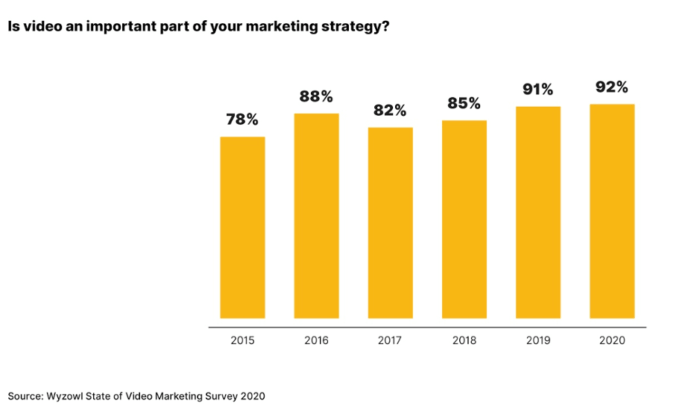
92% of marketers say it’s an important part of their marketing strategy
In 2020, 92% of marketers say that video is an important part of their marketing strategy. This has grown from 78% in 2015, showing that the importance of video is only growing.
So what is it that makes video so important? Well, according to 88% of marketers, video marketing provides them with positive ROI. When you consider that only 33% said the same in 2015, it shows that consumer sentiment toward videos is much stronger now.
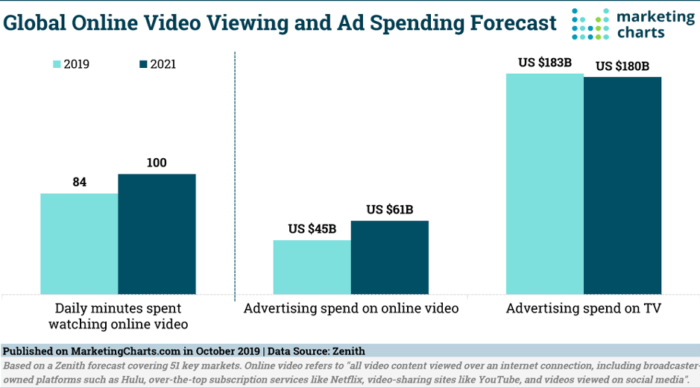
People will spend 100 minutes a day watching online videos in 2021
As well as more brands looking to utilize videos, consumers are now watching more videos than ever before. It is estimated that the average person will spend 100 minutes every day watching online videos in 2021. This is a 19% increase compared to daily viewing minutes in 2019, which stood at 84.
Jonathan Barnard, Head of Forecasting at Zenith, said of this trend: “The consumption of online video is growing rapidly, and the average person will spend half as much time viewing online video as they spend viewing conventional television this year. This fast-expanding supply of audiences is fuelling rapid growth in demand from advertisers, making online video the fastest-growing digital channel by advertising expenditure.”
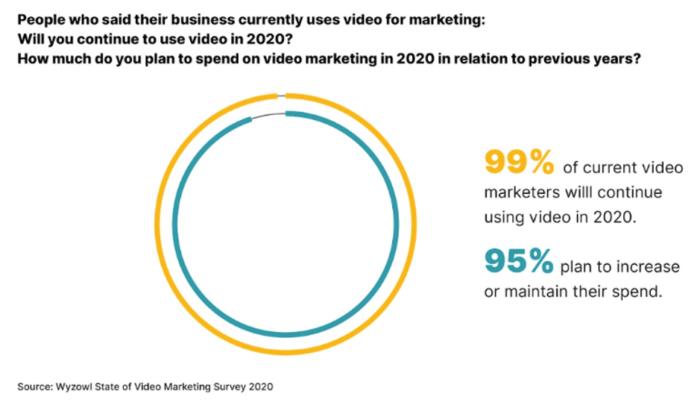
99% of marketers using video will continue to do so in 2020
With the ROI of online videos increasing along with the amount of time consumers are spending watching them, it’s hardly surprising that 99% of the marketers who are currently using videos will continue to do so in 2020. On top of this, 95% of these marketers expect to increase or maintain their current spend on video marketing.
In terms of those marketers who aren’t currently using videos, 59% expect to start doing so this year.

While this shows that video needs to form part of your digital marketing strategy, it also means there will be a lot more competition to deal with. In order to stand out from competitors, you should make sure you understand consumer expectations around video, as well as the big video marketing trends for 2020.
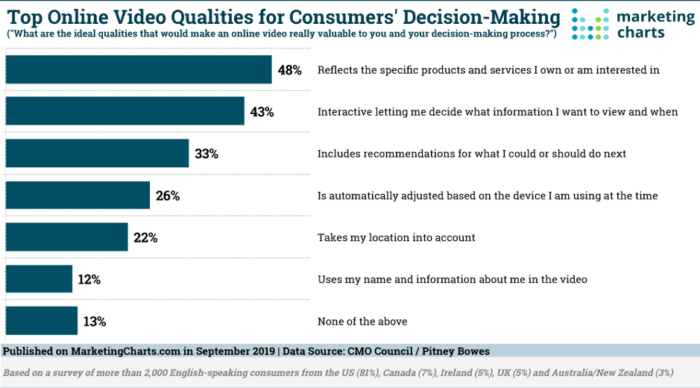
48% of consumers want videos to reflect what they are interested in
As well as being entertaining, videos can form an important part of a consumer’s decision-making process. However, in order to get a customer to convert after watching a video, you need to ensure you are meeting their expectations.
In terms of the ideal qualities that consumers look for in order for videos to be valuable to their decision-making process, 48% want videos to reflect the specific products and services they own or are interested in. A further 43% want interactivity, with the ability to decide what information they want to view and when they want to view it.
However, extreme personalization isn’t really sought after, with just 12% saying they want videos to use their name and information within the content.
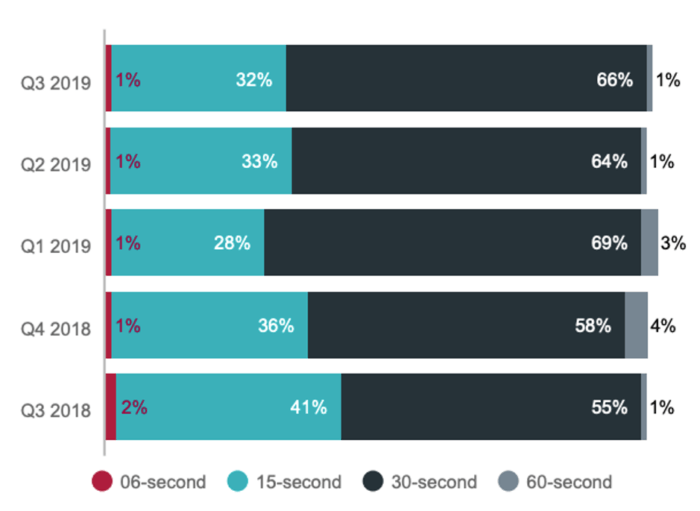
66% of video advertisements were 30 seconds long at the end of 2019
Although the common feeling is that consumers’ attention spans are getting shorter, it seems that this isn’t the case when it comes to video advertising. In Q3 of 2019, 66% of video adverts were 30 seconds long, climbing from Q3 2018’s 55%, showing that longer ads are being seen as effective.
Just 1% of video ads in the same period were six seconds long, with another 1% being 60-second ads. The second most popular ad length during this quarter was 15 seconds, accounting for 32% of ads.
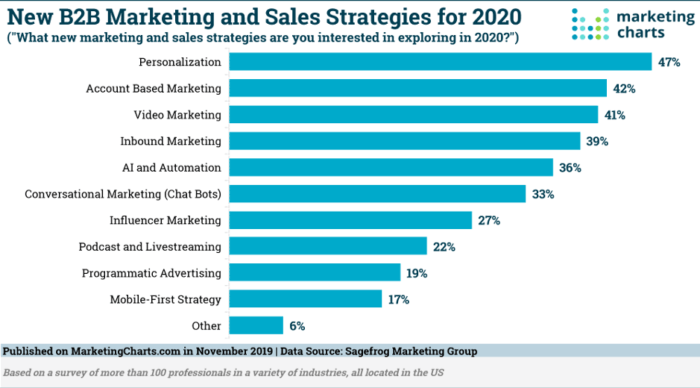
Video marketing isn’t just B2C-focused
Although video is a powerful B2C tool, especially when teamed with social media, it is also being used more by B2B companies looking to increase leads and conversions. In fact, 41% of B2B marketers are interested in exploring how videos can be added to their marketing and sales strategies in 2020.
Download our Individual Member Resource – Video and YouTube marketing guide
Our guide to video marketing will help you grow your business online using video content and video platforms.
Access the Video and YouTube marketing guide
With videos being a great way to share product information, utilizing them throughout the buyer journey can help to further qualify B2B sales leads.
It’s also worth noting that 22% of B2B organizations are interested in exploring the opportunities provided by podcasting and live streaming, suggesting that there may be opportunities in these areas too.
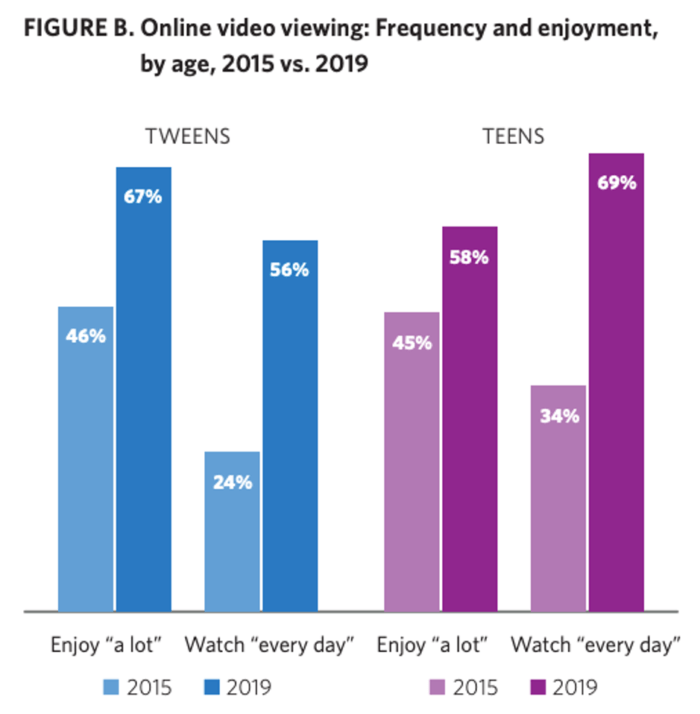
66% of US teens watch online videos every day
Online videos are particularly of interest to younger demographics with 66% of teens (13-19-year-olds) and 56% of tweens (8-12-year-olds) in the US reporting that they watch videos online every day. This represents huge increases in video viewing for these age gaps compared to 2015.
Not only do these age groups watch videos online a lot, but they also enjoy the videos they watch, suggesting that video content has improved. However, this also means that there is a lot of competition for those marketing to these age groups.
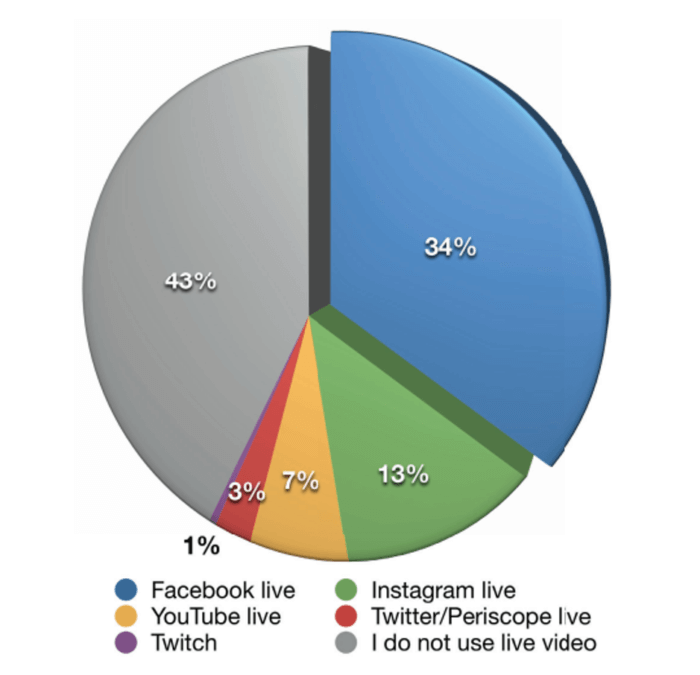
57% of marketers use live video
The rise of social media has meant that there are more types of videos to share than ever before. As a result, 57% of marketers now use live video within their strategies. Over a third (34%) of marketers are making use of Facebook’s live streaming options, creating in-the-moment videos that allow viewers to react in real-time. Instagram is the second most popular option, with 13% creating live videos on the platform.
Live videos are an effective way to create conversations and build a community around your brand. However, they may not be effective for every type of business, so it is worth assessing what your competitors are doing and researching what your audience wants.